
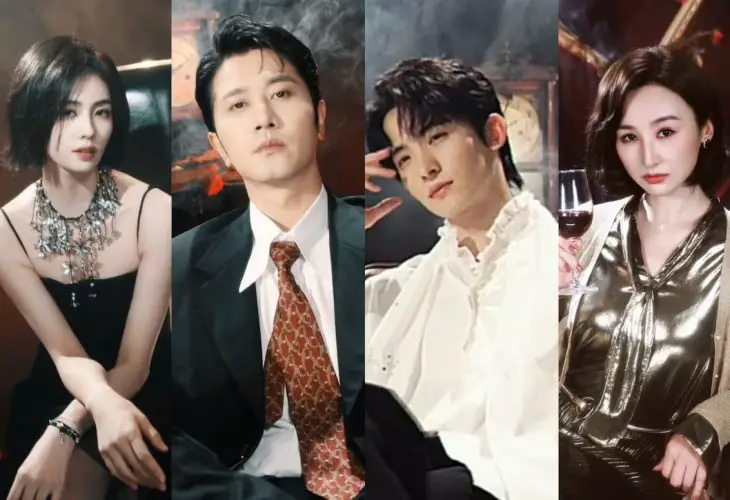
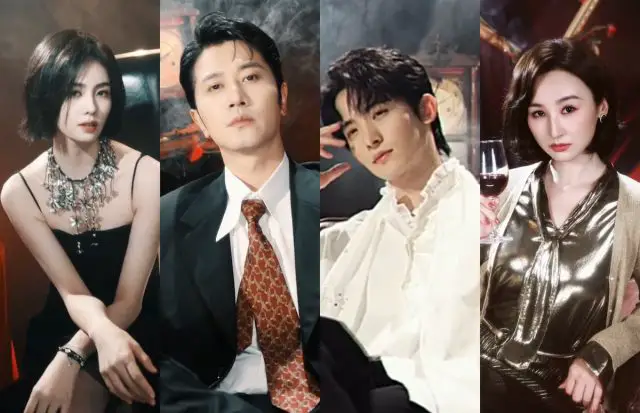
Bai Lu finally kicks start a new drama, her first since leaving her agency of ten years. The drama, adapted from the novel The Last Blossom (开到荼蘼) by Yi Shu, is regarded as a project that marks her departure from the costume dramas. Directed by Li Muge, the series is set in the 1990s and follows Wang Yunna, a woman who is betrayed, imprisoned, and later returns transformed to seek revenge.
Bai Lu is credited under her birth name, Bai Mengyan, leading the drama alongside Hong Kong actress Samantha Ko and Chang Huasen. Peng Guanying, thought to be the leading man due to the significance of his role as the man that turns the heroine’s life upside down, is listed as a special star. Maggie Huang Mengying joins the cast.
Filming officially started in Foshan on July 24, 2026. Bai Lu will have a transformation from an innocent young woman with long black hair, while in the revenge arc she becomes a sharp, composed, and emotionally distant woman with short hair. However, her fans criticized Wang Yunna’s wig and clothing that was captured in behind-the-scenes photos and have been demanding a change. Nevertheless, it looks like the short hair is there to stay as it’s past of the plot though production has reportedly agreed to refine the hairstyle.
In Kai Dao Tu Mi, the story follows Wang Yunna, who is left emotionally scarred by a past relationship. Seven years later, she returns to the country and meets Zuo Wensi, a rising star in the fashion world. The two become engaged, but she soon discovers that Zuo Wensi’s brother-in-law is her former lover, Teng Haiqi. Apparently, the original novel has suspense, melodrama, romance and tragedy, what with a murder in the mix.
Source: 1


Una
Whether the attire is costumed or modern, the story plot still remains the same. Betrayal, revenge and a tragic romance. Same old, same old.
Minnie
I heard that the guy Bai Lu’s character dates ends up being homosexual and only uses her to hide his sexuality. Hopefully, they treat this type of storyline with sensitivity because I’ve noticed this is a trope in Chinese novels and it makes me feel sad that it paints an already marginalized population in China in a bad light.